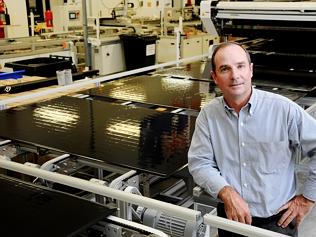
Currently in Australia, there is only one solar panel manufacturer remaining, but that might not always be the case. Tindo Solar, which has a $6 million manufacturing plant and employs dozens of people was set to create 600 jobs under Australia’s Renewable Energy Target.
But that dream may die if the Renewable Energy Target (RET), which was put in place by the Rudd government in 2010, was supposed to help incorporate renewable energy into Australia’s clean energy mix. Right now, the vast majority of Australia’s energy is generated by fossil fuels, namely coal. With the RET, 20% of the energy generated in Australia was supposed to be sourced by renewable sources by 2020. Now that target is in jeopardy, and so are Australia’s renewable energy companies as a result.
The RET’s under scrutiny right now by known climate change skeptic Dick Warburton, the RET Review Head. In a report dubbed the Warburton Report, it was found that funds given to renewable energy companies entering the market are being misspent. It was also proposed that the RET be dropped altogether or to limit the share of new growth in the energy sector acquired by renewable energy companies to 50%. In an interview with the Australian Broadcasting Corporation, Dick Warburton said this of the RET: “…it’s not necessary at the moment. [The] big subsidies are just being misspent when they could be put into other areas.”
Tindo Solar’s position
So where does that leave companies such as Tindo Solar? If the Warburton Report recommendations are approved, Tindo Solar and other renewable energy companies will be left in the lurch and without sufficient funds to keep their doors open. With their growth potential constrained, they may not be able to achieve the economies of scale necessary to compete nationally with the established fossil fuel companies, or even internationally with larger companies who did receive the financial support needed to make them autonomous.
All new technologies must be invested in if they are to have a chance to successfully enter and thrive in a competitive marketplace. As it will be impossible for any renewable energy company to compete with established non-renewable energy companies in terms of cost-competitiveness, the funds provided by investors and governments are a crucial part of the success of these new entrants. However, the message that the Australian government is currently sending to these clean tech companies is that they must become financially self sufficient immediately, or close.
Countries such as Germany, Japan, the United States and now China have all backed their budding renewable energy industries with great results. How will Australia compete in the international energy market as coal supplies dwindle if it doesn’t continue to invest now in its own clean technology companies? Only time, and the Australian government, will tell.