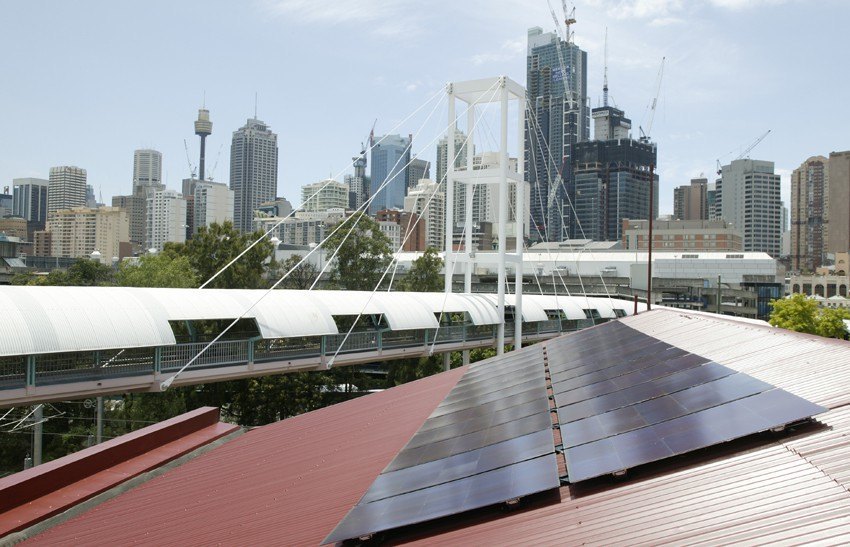
Sydney has an ambition when it comes to environment. This Australian city aims to be a hundred per cent renewable urban location where emission of greenhouse gas will be reduced by 70%, building and strengthening the city’s capacity to generate a hundred per cent electricity by local generation, and developing its water system by water capture locally by the year 2030.
In Sydney solar energy, for instance, makes common sense to use if implemented with interim steps through the right choices which have been based on precise calculations and a mix of optimum technology.
Bringing in the Expert
This is how Allan Jones, an expert in climate change and energy from the United Kingdom, plans to do Sydney’s “100% Renewable by 2030” campaign. His first tasks are to tender the procurement and process for Sydney’s green infrastructure and act as overseer for the city’s roll out of renewable energy projects for its own operations and buildings like the public domain and street lightning using LED, the solar power program using photovoltaic (PV), and the efficiency retrofit for water efficiency and building energy.
Climate change is a priority for Sydney and it has installed what could be the largest solar PV system that is building-mounted in all of Australia. With coverage of 12,000 square metres, the panels are expected to come with reasonable solar quotes for purchasing and generate a capacity of some 1,250kWp of electricity converted from the sun’s rays. Presently, greenhouse gas emissions in Sydney come from electricity produced by coal-fired power plants in Hunter Valley, with roughly two thirds of generated energy wasted on long-distance distribution and transmission over several power lines.
70-30 Mix in Renewable Energy Plan
Jones’ task in Sydney will not be any less challenging than the previous work he did in the English borough of Working, where he was able to reduce emissions by as much as 80%, repeating the feat for London as well.
In Australia, Jones would have to maneuver his way through Sydney’s goal to produce around 70% through renewable gas derivatives from waste and about 30% from renewable, carbon-free sources like wind and solar power to meet the city population’s electricity needs.
The Challenge for Sydney
With a marked decrease in prices of solar quotes for solar panels in the Sydney market, the challenge has grown even more for the city’s consumers to maximise their city’s comparatively small land space that allows only 18% of its energy needs to be met by solar and wind power.
Sydney has, in fact, set a strict parameter of non-use of remote renewable energy sources to avoid vulnerability to storms and other natural element damage and loss of energy, two factors which often accompany distribution networks and overhead types of grid transmission systems.
Motivating Local Businesses
Financed mainly by Sydney’s private sector, its transition from traditional to renewable energy sources will be evident in its gas distribution that will utilise natural gas to get its system up and running and gradually replaced by utilisation of renewable gas from numerous waste resources as the project progresses.
The city has already developed several financing mechanisms to motivate local businesses to participate and buy in to this renewable plan to enable the development of more Sydney solar and wind power projects even before 2030.
Click here to get 3 Sydney Solar Power Quotes and start saving money today.