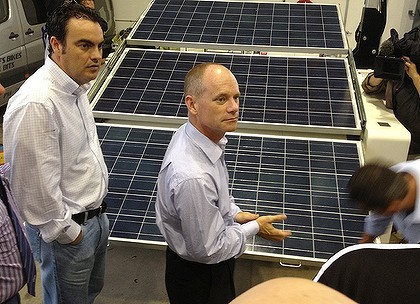
Homes and businesses with solar systems will continue to be paid generously for the power they produce while other consumers front the cost.
The Newman Government has committed to keeping the 44 cents feed-in tariff for power generated by existing solar systems despite the decision impacting vulnerable customers.
The Courier Mail last week revealed projections from the Queensland Competition Authority showing households will pay approximately $240 annually in 2015-2016 to cover the 44 cents feed-in tariff for existing rooftop solar systems.
A huge uptake of photovoltaic (PV) solar systems sees more than 200,00 households currently paid the 44 cents tariff with another 100,00 eligible to access it after pre-purchasing PV systems earlier this year.
However the Newman Government has temporarily cut the tariff for systems purchased after July 9 to just 8 cents, ahead of a review targeted at establishing a “fair and reasonable” price for home-made power.
Currently many households are now earning money from the electricity they produce rather than paying for it.
Solar households often avoid paying for network and infrastructure costs because they are able to use very little, if any, of the common consumer tariff.
The QCA also found that the common consumer tariff would have to increase by an average of $40 annually, on top of the $240 slug, to recover network investment avoided by solar users.