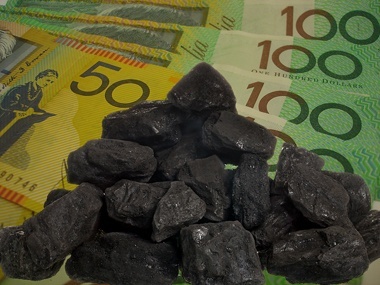
Heavily reliant on coal to generate electricity, Queenslanders will suffer Australia’s biggest electricity price increase thanks to the Gillard Government’s Carbon Tax.
The University of Queensland has conducted a study using supercomputer models to discover the nationwide burden Australian’s can expect. A supercomputer is a series of computers which are used to crunch numbers super-fast. The study indicates that the retails price for electricity will vary considerably, depending on household’s location.
For example, Tasmanians have a low carbon footprint; therefore the state is set to gain significantly from the price once tax and pension changes are taken into account.
The Treasury has predicted that there will be a 10 per cent price rise once the carbon tax sets in. The study conducted by the university estimates an average increase of 8.9 per cent for five of the eastern states. The university’s Global Change Institute is confident that the estimates are the most reliable currently available.
Professor John Foster says his supercomputers closely simulate the behaviour of traders and generators operating in the national electricity market.
“This approach to modelling has produced very realistic simulations of economic behaviour and its effects,” he said.
“It contrasts markedly with other popular modelling approaches that rely on sets of unrealistic assumptions that are included to make the modelling manageable.”
The institute says its modelling should form part of the ongoing debate about the legislated $23 per tonne carbon price.