Solar panels sitting on the roofs of houses in the Bundaberg region and quietly feeding electricity back into the grid might seem like a good idea however some electrical suppliers are concerned.
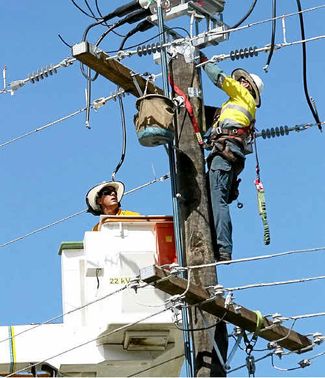
Neil Lowry, executive general manager of asset management for Ergon Energy, said one of the main problems was that the system was not designed to accept electricity from its customers.
The electricity grid is much like a water pipe that delivers water to a house, but is not designed to take it away.
Mr Lowry said Ergon has ways to deal with the boom in Solar Power Electricity, and is closely watching the situation.
One of the problems is that a higher voltage is required to put the energy back into the grid, and the transformers were not designed to handle this.
“If we get clusters of too many people putting electricity into one transformer the transformer is designed to shut off so that it is not damaged,” he said.
“This causes an interruption in supply to everybody drawing power through that transformer.”
Mr Lowry said Solar Power Electricity systems were very popular, with about 2000 applications being received by Ergon each month across regional Queensland. Theses applications come from people wanting to connect to the grid and possibly earn money from it.
However, Ergon would have to manage the situation so there were not too many people connecting to the grid and overwhelming it.
Simon De Bomford, operator of Sunvest Energy confirmed there was a “very good demand” for solar electricity systems.
“People will spend money to save money,” he said.
Mr De Bomford said that Solar Power Electricity could be a good investment, with householders being paid 44 cents for each kilowatt hour they put into the system.
“At the moment you could put $10,000 in the bank and get 6% for it, or you could invest it in a solar system and get a return of $1500 a year.”