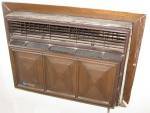
For many of us who grew up in the 1970’s, home air conditioning was uncommon and a luxury. Today, it’s a different story – but the pursuit of home climate control has come at a huge price.
Air conditioning went into overdrive in Queensland last Wednesday, with over 4000 megawatt hours of electricity consumed by the afternoon.
Just a decade ago, only a quarter of Queensland homes were air-conditioned; and usually by a single unit. Today, there are 1.6 million air conditioners installed in 74 per cent of homes.
The situation isn’t confined to Queensland as most other Australian states have seen a massive rise in air-conditioning usage. In 1980 in Western Australia, approximately 37% of homes had air-conditioners. By 2000, this had risen to 45% of homes and by 2004, around 60% had one or more air conditioners. Today, the figure would be even higher.
This rapid uptake has had major ramifications for Australia’s electricity infrastructure and is partly responsible for more coal-fired, emissions belching peak power plants needing to be constructed just to cope with extra load. The electricity produced by these power stations is incredibly expensive, costing in the region of $12,500 per megawatt-hour – $12.50 per kilowatt-hour wholesale.
An Australia Energy Market Commission report last year stated the use of air conditioners will bump up peak demand up by more than 3 per cent in most states, meaning more capacity will be required. Peak demand is now growing 50% more rapidly than the average.
Aside from general education on energy efficiency and raising awareness of alternate methods of maintaining a comfortable home, part of the answer lies in further utilising the sea of rooftops in our towns and cities for solar panel installations. This isn’t a theory, but fact. For example, solar power uptake in NSW has delayed the need for construction of new peak load plants; pegged at costing around $1 billion each.
A recent report from the Intelligent Grid Research Cluster confirmed decentralised energy generation, such as that provided by home solar panel installation, can also defer or reduce expenditure on transmission and distribution networks.
While some believe current solar feed in tariff rates paid to solar power system owners are too generous in some states, others would point out that given rooftop solar panel installation produces the most during peak usage periods, it’s a pittance compared to $12.50 and still viable at even standard time-of-day generation costs – and yet another reason why a rock-solid, national, uniform and fair price for solar electricity should be implemented.
by energy matters