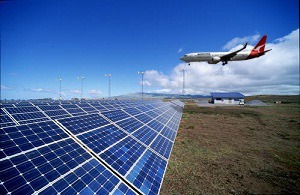
It’s not going to set any capacity records, but international Palau solar Airport new solar panel array is a big deal for such a small nation and sets an example for other countries. The Republic of Palau is an island nation in the Pacific Ocean, situated 800 kilometres east of the Philippines. Occupying an area of just 459 km2, Palau has a population of around 21,000. As is the case with many other Pacific island nations, a significant threat to Palau is rising sea levels, spurred on by global warming. According to Wikipedia, 85% of Palau’s electricity generation is fossil fuel based. That percentage was decreased somewhat recently after its international airport switched on a 226kW solar panel array, supplied by Kyocera Corporation and funded by the Japanese government’s Official Development Assistance (ODA). The first grid-connected solar power system in the country, Palau solar airport is made up of 1,080 Kyocera 210 watt solar modules. Kyocera estimates the system will generate 250 megawatt-hours of electricity annually, avoiding approximately 80 tonnes of carbon dioxide emissions each year. The solar panels are also acting as a shade structure; having been installed in the airport’s parking lot. Due to the prevalence of cyclones in the region, the back of the modules have been reinforced with extra support to increase wind-pressure resistance. With so much land dedicated to car parking around the world, each instance represents a golden opportunity to make better use of this land by the addition of solar panel arrays. Aside from harvesting energy from the sun, these structures also help protect the vehicles beneath them, particularly during summer when the sun beats down and turns the interior of cars into ovens. Additionally, solar panels don’t just create clean, renewable electricity for the nations where they are installed, they can also play a small but vital role in helping prevent island nations such as Palau from the inundation predicted to occur if humanity does not rein in its carbon footprint.
by Energy Matters