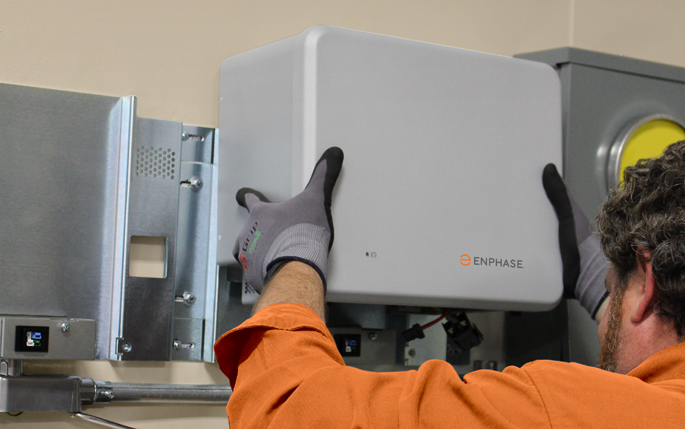
Installing a solar battery in Australia is becoming quite the trend this year. Online search statistics show that Australian interest is increasing considerably as the technology becomes more affordable for homeowners. According to SunWiz recent findings, there are now over 30,000 solar battery setups across Australia. This uptake has lead to a reduction in solar battery prices whilst driving growth and support for the modern technology.
The report produced by SunWiz provides a detailed overview of the Australian energy storage market for 2017. The report includes:
- Projections for 2018 and beyond
- 2017 projects and major news items
- The numbers and volume of energy storage batteries installed in households across all the Australian states in 2017
- List of major projects for 2017 and upcoming in 2018
- Pricing trends and forecasts, as well as existing subsidies in the country
- Financial analysis of energy storage batteries in every Australian DNSP
- Study on consumer purchasing incentives
- Manufacturers public announcements of capacity
- In total, 20,789 energy storage battery systems were installed in 2017, which is almost three times the 6,750 installed the previous year.
12% of the 172,000 solar PV installations in 2017 included solar batteries, up from 5% in 2016
Solar battery market statistics
The highest number of installations happened in the eastern states. New South Wales recorded 42% of storage installations in 2017; 19% in Queensland and 17% in Victoria. South Australia installed 11%.
135MWh of projects happened in 2017, besides the 190MWh of distributed systems.
South Australia remains the best state to install storage batteries, with solar PV-storage ROI averaging at 13.9% (7.19 years). Notably, South Australia’s best ROI is 18.2% – a 5.5 year payback.
The Victorian Time of Use Feed-in Tariff (FiT) provides significant advantages to customers who sign up to it. The recent research found out that:
- The TOU FiT is better than the flat-rate FiT, for solar panel installed with or without batteries.
- North facing solar panels deliver better outcome, with or without solar batteries, whether on TOU scheme or the flat-rate FiT.
Known to be one of the reliable solar market research providers in Australia, SunWiz has over time become a trusted independent market analyst relied upon by fortune 500 companies who also share their insights and information during SunWiz’s research. This report therefore gives an unprecedented transparency into the rather ambiguous market.
Want to dive a little deeper? Then download the report from SunWiz now!